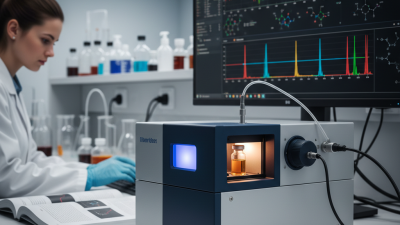
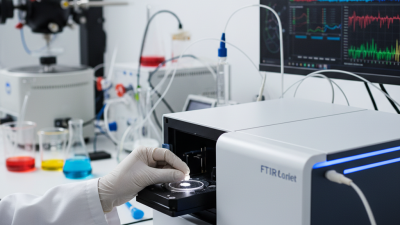
When it comes to spectroscopy, having a really good IR spectrometer can honestly make a huge difference. Researchers rely on these tools for accurate analysis, so choosing the right one is pretty important. Looking ahead to 2026, the market's changing a lot, offering a bunch of options for scientists to consider.
Figuring out which IR spectrometer is the best fit isn’t always straightforward—that’s where experience and a bit of insight come in. Big names like Bruker, Thermo Fisher, and PerkinElmer are the ones many folks talk about. Each of these brands brings something unique to the table, with different features and tech. But I gotta say, with so many choices, it can feel quite overwhelming.
The key thing is to really understand what your specific needs are. Not every spectrometer is built for the same purpose. Some are blazing fast, while others are all about sensitivity. That can make your decision process a little tricky. So, take a moment to think about your research goals and figure out which specs actually matter most. And, of course, balancing quality with your budget is a challenge — high quality usually doesn’t come cheap, and that’s something to keep in mind.

2026 Overview of Infrared Spectroscopy and Its Importance in Research
Infrared spectroscopy is a vital technique in scientific research. It plays a crucial role in chemical analysis, material characterization, and quality control. By measuring the absorption of infrared light, researchers gain insights into molecular structure and composition. This method is non-destructive, making it ideal for various applications, from pharmaceuticals to environmental studies.
However, the understanding and application of IR spectroscopy are not without challenges. Different materials can absorb infrared light in unique ways. This variability can complicate data interpretation. Researchers often need to complement IR spectroscopy with other methods to ensure accuracy. There is also a learning curve involved in mastering the interpretation of spectral data.
Despite these challenges, the impact of infrared spectroscopy is profound. It enhances our ability to analyze complex mixtures and offers real-time monitoring capabilities. As technology advances, new spectrometers continue to emerge, pushing the boundaries of analytical chemistry. Researchers must remain adaptable, continually refining their methods and approaches to harness the full potential of this powerful technique.
Key Features to Consider in Selecting an IR Spectrometer for Quality Analysis
When selecting an IR spectrometer for quality analysis, several key features demand attention. One important aspect is the spectral range. A wider range allows for the detection of more compounds. According to industry reports, devices covering 4000 to 400 cm⁻¹ are ideal for comprehensive analyses. This range facilitates deeper insights into molecular structures, enhancing research.
Sensitivity is another critical factor. Instruments with higher sensitivity can detect minor fluctuations in concentrations. Reports indicate that modern spectrometers can achieve detection limits in the ppm range, making them valuable for precise quality assessments. Furthermore, resolution plays a vital role in data accuracy. A standard resolution of 4 cm⁻¹ is preferred for clear and interpretable spectra.
Versatility in sampling techniques is crucial as well. Instruments capable of performing various types of analyses—such as transmission, reflection, and ATR—offer more flexibility in applications. This adaptability is particularly beneficial when working with diverse materials. Yet, users should be cautious of overcomplicating the analysis process. Balancing complexity with user-friendliness is essential for effective quality analysis.
Top IR Spectrometer Brands and Models for Laboratory Applications in 2026
When selecting an IR spectrometer for laboratory applications in 2026, it’s crucial to examine the capabilities of different models. Enhanced sensitivity and resolution are essential features for accurate quality analysis. Many spectrometers now include advanced software for data interpretation. However, the complexity of these tools can sometimes hinder effective use. Training staff on proper usage is vital.
Consider the optics in your choice of spectrometer. Different brands provide various optical setups that can affect results. High-quality optics lead to better resolution, yet they can be costly. Weighing the cost against the expected output can lead to insightful decisions. Sometimes, investing in a mid-range model with excellent features is more practical than opting for the top-tier option.
When using an IR spectrometer, calibration is often overlooked but critically important. Regular calibration ensures reliable data, which impacts research quality. Pay attention to the environmental conditions as they can influence spectral readings. Precision in interpreting results varies widely among users. Always reflect on past experiences to improve future analyses, as learning from past mistakes is part of the process.
Comparative Analysis of Spectral Range and Resolution in IR Spectrometers
The spectral range and resolution of IR spectrometers are critical for quality analysis and research. Different applications may require distinct spectral ranges. For example, some researchers need mid-infrared (MIR) for molecular fingerprinting, while others focus on near-infrared (NIR) for material analysis. Each range has its strengths and weaknesses.
Resolution is equally important. A higher resolution allows for better differentiation of closely spaced peaks in a spectrum. However, increasing resolution can lead to longer acquisition times. Balancing these factors is essential to get the most accurate results. It is common to encounter situations where these attributes do not meet the specific needs of your project.
Getting the best of both worlds often entails compromises. Extensive research into the exact requirements of your application can guide you in selecting the right spectrometer. Consider the trade-offs and adjust your needs accordingly. Knowing when to prioritize range over resolution, or vice versa, can enhance your analytical capabilities significantly. Experimentation may reveal surprising insights, sometimes challenging initial assumptions about necessary specifications.
Emerging Technologies in IR Spectrometry: Trends for Future Research
Emerging technologies in infrared (IR) spectrometry highlight significant trends that will shape future research. Advanced sensors and detectors are becoming more sensitive, improving the accuracy of measurements. These developments are driving new applications in diverse fields like materials science and pharmaceuticals. As researchers seek faster results, automation in spectrometry is a growing focus. Automated systems can handle large datasets efficiently, reducing human error and increasing throughput.
The integration of machine learning and AI is another significant trend. These technologies analyze complex IR spectra, identifying patterns that were previously missed. However, reliance on algorithms raises challenges in validation and data management. Researchers must ensure that models are transparent and reliable, avoiding black-box systems that obscure understanding.
As IR spectrometry evolves, the demand for better calibration standards is crucial. Standardization helps maintain consistency across studies, which is vital for replicable results. Despite advancements, the field needs continuous reflection on methodologies. Each new technology comes with its own set of limitations and uncertainties that researchers must address. Balancing innovation with critical assessment will be essential for future success in IR spectrometry.
Case Studies: Successful Applications of IR Spectroscopy in Various Industries
Infrared (IR) spectroscopy plays a crucial role in various industries, affecting quality analysis and research. In the pharmaceutical sector, for example, IR spectroscopy is vital for identifying compounds. A report from the International Society for Pharmaceutical Engineering noted that approximately 70% of quality control laboratories utilize IR spectroscopy to monitor drug compositions. This rapid identification helps in ensuring product safety and compliance with industry standards.
In the food industry, IR spectroscopy enhances the evaluation of food quality. A study published in the Journal of Food Science revealed that 65% of food manufacturers employ infrared techniques to detect adulteration. This method allows for quick screening of ingredients, ensuring that consumers receive safe products. However, it is important to note that IR spectroscopy has limitations. Detection of complex mixtures remains a challenge, which can affect its reliability in some scenarios.
Another application is in environmental monitoring. Here, professionals rely on IR spectroscopy to analyze air and water quality. The Environmental Protection Agency reported that about 55% of air quality assessments involve infrared methods. While effective, the reliability of results can fluctuate based on the calibration of instruments. As industries continue to evolve, the need for improved techniques is evident. Further research is necessary to address the challenges faced in IR spectroscopy applications.
2026 Best IR Spectrometer for Quality Analysis and Research
Expert Insights: Future Directions in Quality Analysis with IR Spectrometers
Infrared (IR) spectrometers have seen significant advancements, shaping future trends in quality analysis. These instruments offer powerful insights into material properties. They analyze molecular structures, which is crucial for various fields like pharmaceuticals and food safety. The precision of modern IR spectrometers allows for better identification of compounds, enhancing reliability in research.
As industries focus on sustainability, IR spectrometers will play a critical role. They can monitor environmental impacts and ensure compliance with regulations. However, challenges remain. Many users still struggle with data interpretation. It’s essential to improve training and resources for researchers. The technology can be complex, but understanding these instruments is vital for their effective use.
Looking ahead, integrating artificial intelligence with IR spectroscopy appears promising. AI can help streamline data analysis and increase accuracy. However, reliance on technology raises questions about human oversight. Balancing innovation and human expertise will be key. Researchers must continue to evolve their methods and stay informed about these developments.
FAQS
: Infrared spectroscopy is used for chemical analysis, material characterization, and quality control in research.
It measures the absorption of infrared light to provide insights into molecular structure and composition.
Different materials absorb light in unique ways, complicating data interpretation. Mastering spectral data also has a learning curve.
Non-destructive methods allow for analyzing samples without altering or damaging them, which is crucial for accurate results.
Consider the spectral range, sensitivity, resolution, and versatility in sampling techniques for effective quality analysis.
A wider spectral range allows for the detection of more compounds, facilitating deeper insights into molecular structures.
Higher sensitivity enables detection of minute fluctuations in concentrations, essential for precise assessments.
Versatile options like transmission, reflection, and ATR enhance flexibility in analyzing diverse materials.
Yes, overcomplicating the analysis process can lead to misunderstandings. Balance is key for effective quality assessment.
Continuous practice and learning can help researchers refine their interpretation of spectral data and enhance analysis quality.
Conclusion
The article titled "2026 Best IR Spectrometer for Quality Analysis and Research?" provides a comprehensive overview of infrared spectroscopy and its critical role in research and quality analysis. It emphasizes the importance of selecting the right IR spectrometer, highlighting key features to consider such as spectral range, resolution, and the latest technological advancements that enhance spectrometric capabilities.
Additionally, the article includes comparative analyses of various IR spectrometers available in 2026, showcasing successful applications across different industries through case studies. Expert insights into future trends in quality analysis with IR spectrometers are also discussed, outlining the potential directions for research and innovation in this vital field. This synthesis of information is invaluable for researchers and professionals looking to leverage IR spectrometry for enhanced analytical performance.